About PIQM 2026
The school focuses on molecular simulations based on the path integral formulation of quantum mechanics, which relies on the isomorphism between the partition function of a quantum system and a fictitious classical system of ring polymers. Since the early pioneering work on Path Integral Molecular Dynamics and Monte Carlo, significant progress has been made, e.g., Centroid or Ring Polymer Molecular Dynamics that can approximate quantum response properties such as diffusion coefficients, reaction rates, and spectra. These methods have been applied more widely in recent years, thanks to the development of highly efficient algorithms to include important nuclear quantum effects, such as delocalization, zero-point energy, and tunneling in molecular simulations. Many of them have been implemented in the open-source software i-PI and are used routinely by a global community of computational chemists, physicists, and material scientists, which has grown substantially in the past 15 years.
CECAM has previously supported several advanced Schools (2012, 2016, 2018, 2021, 2023) on path integral quantum mechanics, which helped train a young generation of graduate students and ECR in this expanding field. Different from previous events, PIQM 2026 emphasizes path-integral simulations in the context of Machine Learning advancements. The field is currently being revolutionized by algorithms that describe interparticle interactions to significantly accelerate simulations, introducing new paradigms that are potentially reshaping future path-integral methodologies.
Conference History
PIQM: Theory, Simulation and Application
June 13 - 17, 2016 • CECAM-HQ-EPFL, Lausanne, Switzerland
PIQM: From the Basics to the Latest Developments
June 14 - 18, 2021 • Online, hosted by CECAM-HQ
PIQM in the Era of Machine Learning
July, 2026 • Fudan University, Shanghai, China
Scientific Scope
Imaginary Time Path Integrals & Quantum Dynamics
Quantum Rate Theories
Semiclassics Methods
Machine Learning & Applications
Beyond Path Integrals
Organizers
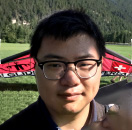
Wei Fang
Fudan University
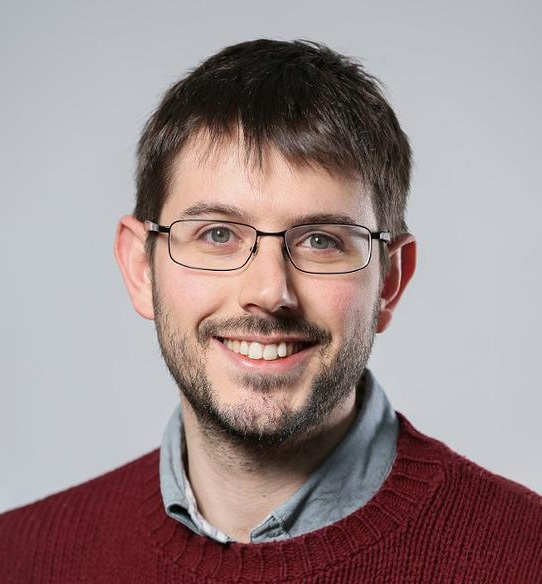
Michele Ceriotti
EPFL
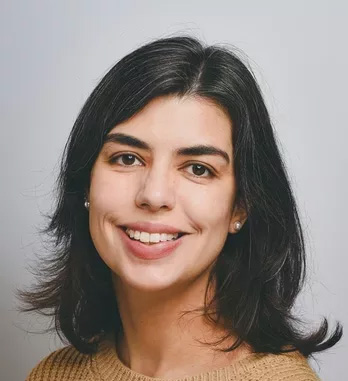
Mariana Rossi
Max Planck Institute for the Structure and Dynamics of Matter

Yair Litman
Max Planck Institute for Polymer Research

Venkat Kapil
University College London
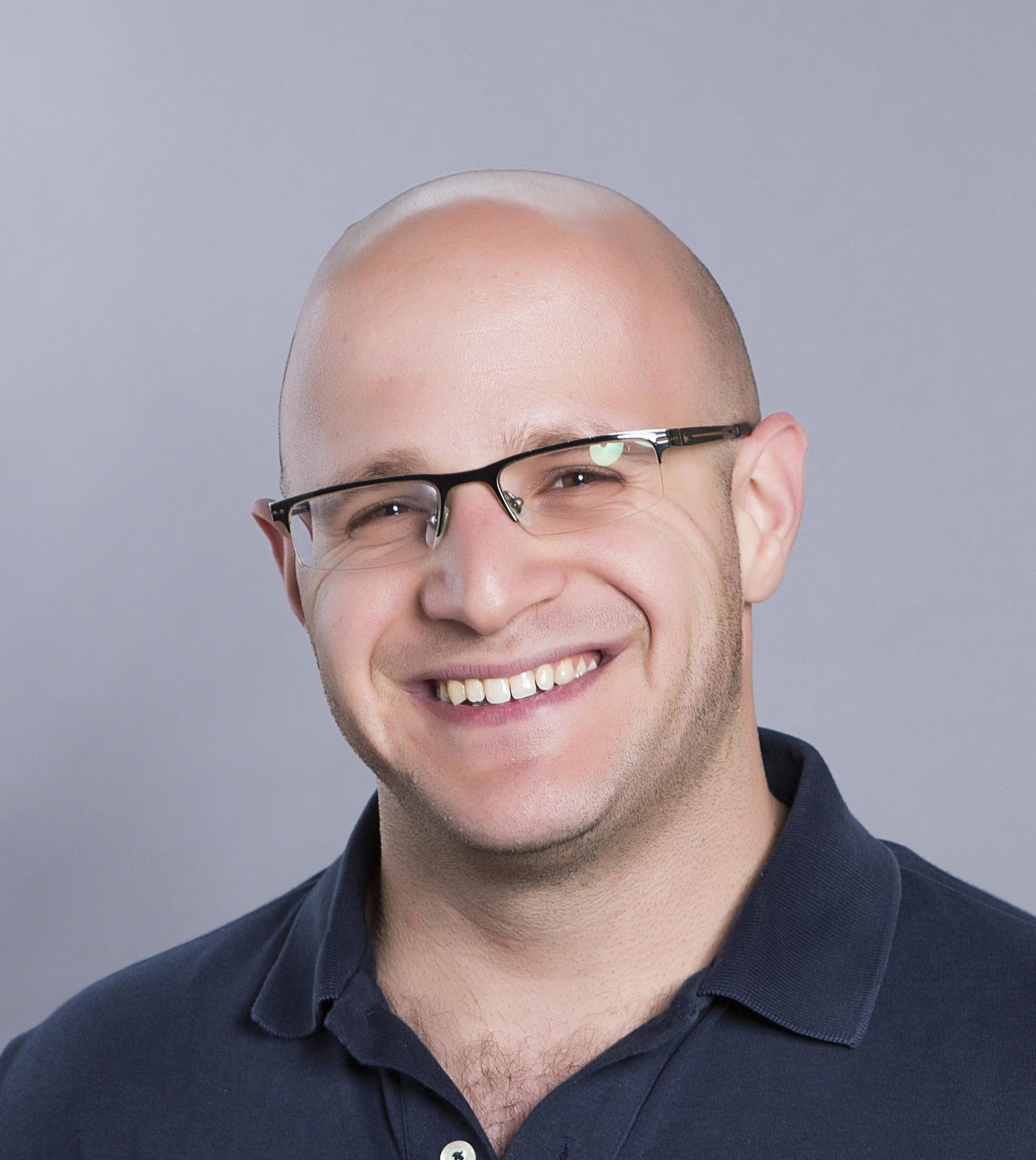
Barak Hirshberg
Tel Aviv University
Thomas Markland
Stanford University
Davide Tisi
EPFL